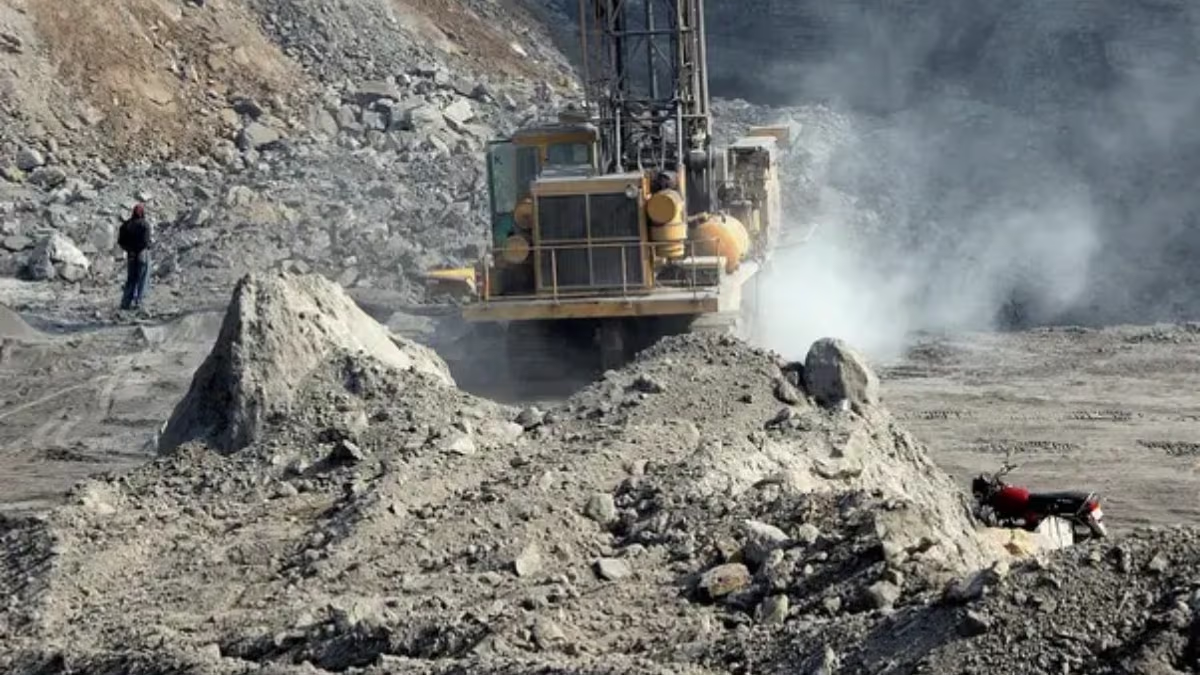
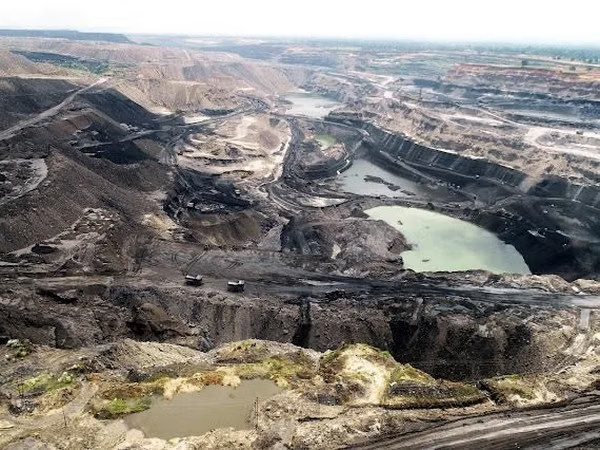
Acid Mine drainage (AMD), is one of the most frequently encountered effluent water quality challenge to the coal mining industry second to only suspended solids. While suspended solids have more simple solution such as sedimentation AMD may require special treatment methodology sometimes depending upon quantum and quality of mine water discharge rather than just lime mixing.
In this paper an attempt is made to explain AMD, cause, effects on water quality and other parameters, prevalent techniques as well as An Innovative Solution provided by CMPDI in Western Coalfields Limited regarding Acid Mine Drainage Treatment.
Keywords: Acid Mine Drainage, Environment, Mine Water Treatment, CMPDI, Constructed wetland
Acid Mine drainage (AMD), is one of the most frequently encountered effluent water quality challenge to the coal mining industry second to only suspended solids.
Cause:
The coal deposit are usually associated with sulfur or iron minerals (pyrite, chalcopyrite, arsenopyrite, galena, sphalerite, pyrrothite, covelite). Consequently, these sulfide minerals, prominently Pyrites, are found in waste rock piles i. e. Overburden dumps. Exposure of OB to air and water leads to sulfate and iron oxidation and production of acid mine drainage known as AMD. The kinetics of this oxidation reaction is enhanced in the presence of thiobacillus ferrooxidan bacteria, that can speed up the reaction rate about 105 time compared to abiotic reaction. The acidification will impact the release of metals from various minerals. An orange-brown color of insoluble Fe(OH)3 usually characterizes this acidic drainage.
Chemical reactions occurring can be represented as below
FeS2 +15/4O2 + 7/2H2O → Fe(OH)3 + 2H2SO4
Effects on life and material:
- Low pH water is very much dangerous as it can damage body organs.
- It can leach several heavy metals and contaminate fresh water with such metals.
- Low pH water causes erosion of metals which results in loss of property and threat to safety.
- Iron, a usual Cation with sulphate, can choke pipes, decolours substances (have a very strong red colour.
Prevalent Techniques for Treatment of AMD:
- Lime Neutralization – The most commonly used commercial process for treating acid mine drainage is lime In this application, a slurry of lime is dispersed into a tank containing acid mine drainage. Lime, as having a strong basic characteristics, neutralises acid, making mine water neutral.
Advantage – Lime is very easily available and this technique is very easy in terms of operation.
Disadvantage – Lime thus mixed in AMD would generate high quantum of sludge if mine water is highly acidic or quantum of mine water discharge is high. This sludge handling is another environmental problem associated.
- Limestone Bed Filter – Limestone bed filter is a passive technique. It follows same principle as Lime neutralization.
Advantage – Limestone Bed Filter, as a passive process, uses less operational effort and thus can save valuable work-hours
Disadvantage – Lime stone process is slow and thus result in sometimes a very large size of filter, which can cause huge construction cost.
- Constructed Wetlands – constructed wetlands may use plant species …. .This plants raise pH of acidic water.
Advantage – constructed wetlands technique is a relatively low cost technique. No sludge or secondary pollutant is generated from this technique.
Disadvantage – Constructed wetlands are less effective on very low pH thus generally accompanied by a primary treatment. Effectiveness of the technique also decreases with increased metal load.
Methodology for remedial measures as developed by CMPDI
Brief Background:
Western Coalfields limited operates in Maharashtra and Madhya Pradesh. As per Environmental Protection Rules 2000, effluent water quality is to be maintained. Effluent standards for pH is 5.5- 9.0. Based on the regular environmental monitoring of WCL mines an exercise was done to ascertain no. of mines which were having acidic discharge. Most of the mines thus identified were having intermittent discharge of AMD while few were having a frequent discharge of AMD. It was requested by WCL to design a specialised, cost effective yet simple treatment design for such mines.
A technical team of Environment Deptt of CMPDIL was formulated at CMPDI RI 4 to address this issue of Acid Mine Drainage being faced by WCL.
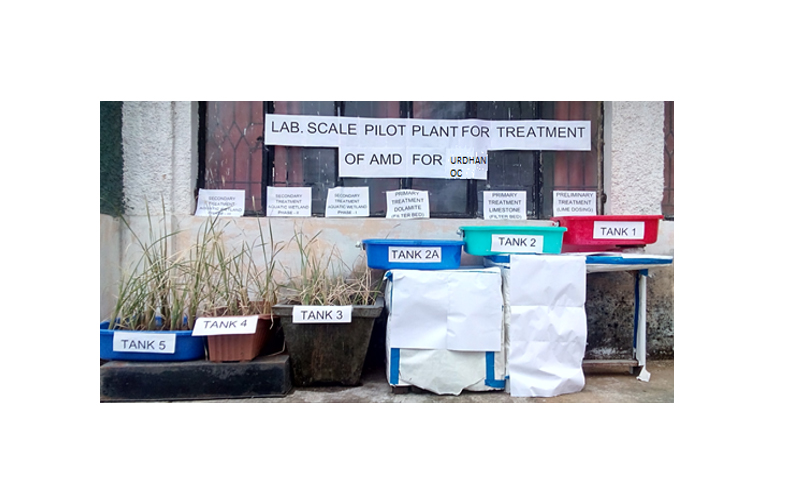
A laboratory scale pilot plant was setup at Environment laboratory RI-IV, CMPDI, Nagpur and AMD samples from the mines were analysed and subjected to pilot plant study.
Description of Laboratory scale pilot plant.
It comprised of 3 units
- Lime Mixing Tank: – A 20 ltr water was mixed with different lime doses in a mixing tank. Lime was mixed magnetic stirrer at 500 rpm for 5 minutes. Resultant pH was noted.
- Limestone Filter Bed: – A bed of 10 Kg limestone was formed within a 20 ltr tank. Mine water sample, after a lime mixing, was kept in the tank for 0 Hr to several hours for detention and pH increase was observed.
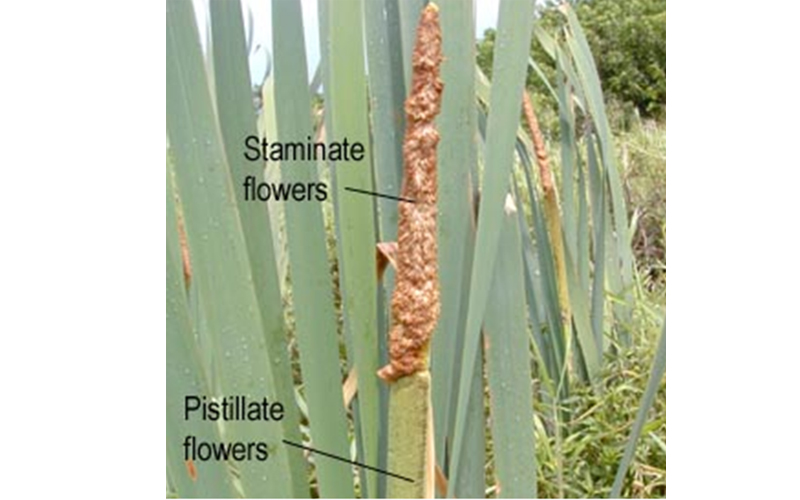
- Constructed Wetland: – Typha latifolia (broadleaf cattail, bulrush, common bulrush, common cattail, great reedmace, cooper’s reed, cumbungi) is a perennial herbaceous plant in the genus Typha. Typha latifolia is a known bio-remediator, which increases pH of the water. 9 cm spacing was maintained in constructed wetland.
Results:
Lime Mixing:-
Optimum Dosage of lime treatment to remove acidity upto certain level for Primary treatment was conducted with the help of Jar test equipment. 6 samples of 1 litre was mixed with concentration of lime (CaO) of different quantities for 5minutes. Results from the Jar test is mentioned below
It was arrived to a conclusion that a dose of 0.04 gm/litre would be a suitable dose to increase pH upto 3.5~4.0.
Table 1- Result of pH increase in tank-1 after addition of Lime
| Batch | Initial pH | Final pH after Lime Dosing (0.04 grams per litre) |
| 1 | 3.25 | 3.70 |
| 2 | 3.25 | 3.70 |
| 3 | 2.61 | 3.40 |
| 4 | 3.30 | 3.95 |
| 5 | 3.30 | 3.90 |
Limestone Bed Filter:
No. of batches were run and graph was plotted between pH against detention time.
A suitable detention time was observed to be 6 Hrs.
Constructed Wetland:
A suitable detention time was observed to be 24 hrs.
Final result:
Table 2 Initial and Final pH of the sample
| Sl. No | Initial pH | Final pH |
| 1 | 2.66 | 6.89 |
| 2 | 2.68 | 6.93 |
| 3 | 2.70 | 7.69 |
| 4 | 2.84 | 6.95 |
| 5 | 2.92 | 7.56 |
Total detention time of the sample was calculated as 30 Hrs. (Lime Mixing excluded)
FIELD DESIGN AND RESULTS:
The same design has been replicated at Urdhan OC as well as at Naheriya UG of Western Coalfields Limited located in Pench Valley coalfields in Madhya Pradesh.
Recommended Design
- Lime Mixing
Lime mixing is to be done as 0.04 gm/l of the effluent. This dose may vary depending upon the pH of mine water and quantum of mine water. In case of Naheriya UG where design capacity is 300 KLD. A lime dosage of 12 Kg/Day was prescribed.
To compensate for mechanised stirring results obtained in laboratory conditions, an enhanced detention time of 30 minutes was provided. Further it was advised to mix lime at mine sump as pumping of mine water will augment mixing process.
- Limestone Bed Filter
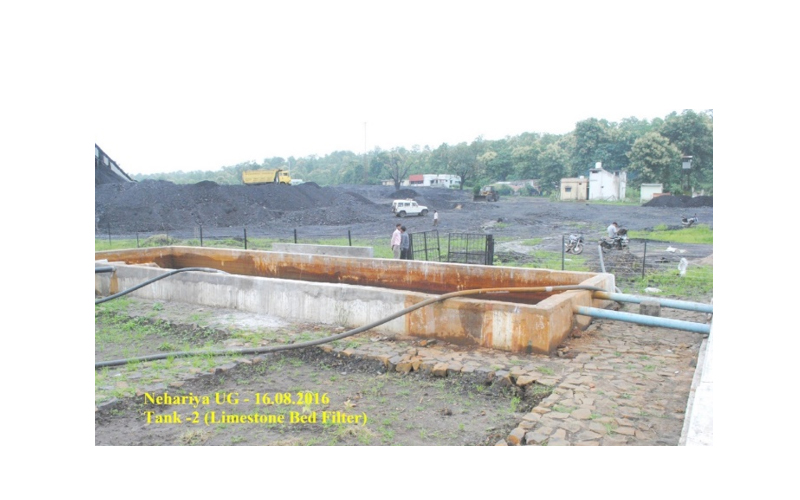
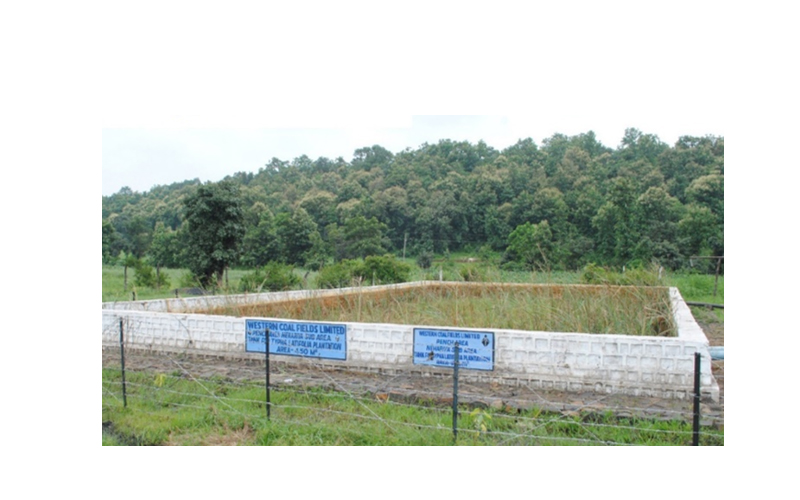
A composite Limestone Bed Filter of size 16m X 5m X 2m with 0.3 m of freeboard was suggested with detention time of 6 hrs with partition to provide alternate tank arrangement. 75 tonne of Limestone (commercially known as marble dana of 1” size) was used for filter bed.
Figure 3 Limestone Bed Filter at Naheriya UG
- Constructed Wetland
Wetland consisting of Typha latifolia (cattail) was constructed. Spacing of 9 cm was maitaianed. Dimention of constructed wetland were 30m X 15m X 1m.
Figure 4 Constructed Wetland
Field Results
| Date of Sample
collection |
pH Results | |||
| Mine Discharge | (Lime Mixing Tank) | (Lime Stone Filter bed) | Constructed wetland (Typha latifolia) | |
| Detection Limit- 0.2 | ||||
| 01.07.16 | 3.78 | 4.51 | 4.81 | 6.08 |
| 02.07.16 | 3.62 | 4.17 | 4.89 | 6.13 |
| 04.07.16 | 3.73 | 4.23 | 4.90 | 6.31 |
| 05.07.16 | 3.81 | 4.20 | 4.94 | 6.41 |
| 06.07.16 | 3.84 | 4.08 | 5.01 | 6.47 |
| 07.07.16 | 3.85 | 4.12 | 5.07 | 6.44 |
| 08.07.16 | 3.81 | 4.03 | 5.12 | 6.40 |
| 09.07.16 | 3.89 | 4.19 | 5.14 | 6.32 |
| 11.07.16 | 3.32 | 4.09 | 5.17 | 6.17 |
| 12.07.16 | 3.33 | 4.13 | 5.15 | 6.19 |
| 13.07.16 | 3.41 | 4.23 | 5.02 | 6.07 |
| 14.07.16 | 3.43 | 4.24 | 5.09 | 6.03 |
| 15.07.16 | 3.19 | 4.27 | 5.02 | 6.01 |
| 16.07.16 | 3.31 | 4.11 | 4.87 | 6.03 |
| 18.07.16 | 3.32 | 4.14 | 4.91 | 6.13 |
| 19.07.16 | 3.35 | 4.18 | 4.82 | 6.07 |
| 20.07.16 | 3.37 | 4.23 | 4.89 | 6.13 |
| 21.07.16 | 3.38 | 4.16 | 4.90 | 6.12 |
| 22.07.16 | 3.39 | 4.18 | 4.97 | 6.19 |
| 23.07.16 | 3.31 | 4.21 | 4.92 | 6.13 |
| 25.07.16 | 3.30 | 4.24 | 4.89 | 6.23 |
| 26.07.16 | 3.32 | 4.17 | 4.93 | 6.32 |
| 27.07.16 | 3.27 | 4.16 | 4.84 | 6.08 |
| 28.07.16 | 3.21 | 4.18 | 4.89 | 6.09 |
| 29.07.16 | 3.19 | 4.13 | 4.81 | 6.04 |
| 30.07.16 | 3.13 | 4.09 | 4.78 | 6.01 |
| 01.08.16 | 3.30 | 4.12 | 4.80 | 6.17 |
| 02.08.16 | 3.34 | 4.18 | 4.87 | 6.21 |
| 03.08.16 | 3.31 | 4.22 | 4.89 | 6.27 |
| 04.08.16 | 3.32 | 4.17 | 4.92 | 6.31 |
| 05.08.16 | 3.37 | 4.13 | 4.98 | 6.33 |
| 06.08.16 | 3.31 | 4.13 | 4.97 | 6.32 |
| 08.08.16 | 3.38 | 4.12 | 4.89 | 6.27 |
| 09.08.16 | 3.32 | 4.16 | 4.86 | 6.25 |
| 10.08.16 | 3.31 | 4.17 | 4.89 | 6.29 |
| 11.08.16 | 3.37 | 4.16 | 4.84 | 6.23 |
| 12.08.16 | 3.31 | 4.15 | 4.82 | 6.24 |
| TLV as per Env.(Protection)
Amendment rule 2000 |
5.5 – 9.0 | |||
Conclusion
This design has been implemented in Western Coalfields Limited and given desirable results in a very cost-effective manner. Since lime dosing is minimised compare to traditional lime neutralization method, sludge generation has been reduced. It also reduced continuous expenditure on lime. Typha latifolia plants offer various benefits in addition to reducing acidity such as sludge stabilization, heavy metals reductions. Typha latifolia requires very less maintenance.
This design can be very useful in Indian context of coal mining where acidic mine discharge is encountered. As design does not significantly use chemical methods, generation of secondary pollutants/waste (waste from treatment designs) is reduced thus reducing liability on mine operators/ coal companies.
[1] Director (T) (P&D), CMPDI Ranchi
[2] Regional Director, RI-IV, CMPDI Nagpur
[3] Dy. Manager (Environment)